Recycling and Sustainability — Gardener Southwark
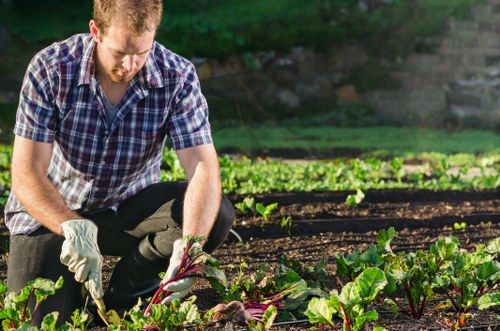 As Gardener Southwark, we place sustainable waste management at the heart of every project. Our approach to eco-friendly waste disposal is designed to keep the borough's soil healthy, reduce landfill use, and support circular reuse systems for garden materials. Whether you are working with our Southwark gardener teams or planning a community planting, we prioritise low-carbon methods and resource recovery so green spaces thrive without generating unnecessary rubbish.
Our commitment includes a clear recycling percentage target: we aim for a 65% recycling rate across all garden-related waste streams within five years. This target is ambitious but realistic when combined with careful on-site segregation, coordinated collection, and local partnerships. The target covers green waste, food scraps from community gardens, wood, compostable planting containers and recyclable plastics commonly used in horticulture.
 We actively align with the boroughs' approach to waste separation — encouraging separation of organics, dry recyclables and non-recyclables at source. That means compostable material from planting beds is kept separate from plastics and metals, and bulky garden items follow reuse-first routes. Our Southwark gardening recycling initiatives include small-scale composting hubs and clear signage to help volunteers and residents follow the correct separation patterns used by local waste authorities.
Eco-friendly waste disposal area and the sustainable rubbish gardening area
Creating an eco-friendly waste disposal area starts with simple design choices. We identify shaded, accessible zones for green waste bays, label containers with durable graphics, and use permeable surfaces to avoid run-off. Our sustainable rubbish gardening areas are designed so that leaves, prunings and spent compostable materials can be processed quickly into usable compost or woodchip, minimising haulage and emissions.
To reduce transport impact our fleet includes low-carbon vans and smaller electric trailers for short hops across Southwark. These vehicles are supplemented with route optimisation and telematics to reduce mileage and idling. As an urban gardener in Southwark we understand the value of compact, efficient logistics: fewer rounds means fewer emissions and fewer disturbances for neighbourhoods.
 Our operations link with local transfer stations and consolidation points so that non-compostable materials are sent to appropriate facilities rather than landfill. We coordinate collections to material recovery facilities (MRFs) for paper, card, metal and plastic, and book slots at nearby transfer depots to reduce double handling. Where possible, we prioritise transfer stations with renewable energy credentials or ones that offer localised processing to keep materials circulating within the borough.
Local partnerships, charities and reuse networks
Partnerships strengthen the circular economy. Gardener Southwark works with local charities and social enterprises to redistribute useful garden items — plant pots, soil conditioners, tools and surplus plants — before they are discarded. These collaborations help community food-growing groups and provide training opportunities while diverting resources from waste streams.
Examples of collaborative activity include:
- Tool and seed exchanges operated with local community groups;
- Compost and mulch sharing arrangements with food-growing charities;
- Furniture and pallet reuse schemes for raised beds coordinated with social enterprises.
For residents and groups using our services, the emphasis is on reuse-first. If items cannot be reused locally, we arrange collection to partner charities that redistribute items across Southwark and neighbouring boroughs rather than consigning them to incineration or landfill.
 Waste separation on-site is simple to implement: labelled bins for garden waste, separate sacks for food waste, and a small container for clean plastics and metals. We provide training for teams so that crews and volunteers understand the borough's guidance on what goes where. Small changes in practice yield big gains against our recycling percentage target and reduce contamination rates at local transfer stations.
To support this, we deploy low-carbon vans and electric vehicles for many collections. These vehicles are charged using green energy where available, and we continually review fleet efficiency. Our logistics strategy pairs smaller electric vans for dense urban collections with hybrid vehicles for occasional heavier loads — an approach that reduces emissions without compromising service.
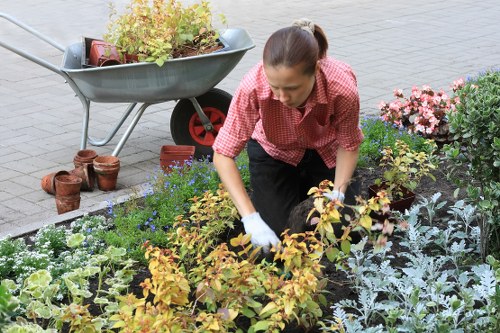 Looking ahead, Gardener Southwark's sustainable rubbish gardening area will expand to include more community-managed compost bays, sheltered storage for reusable materials, and seasonal take-back events to recycle plant pots and polythene responsibly. We will measure progress against the 65% recycling target, publish regular summaries of tonnages diverted from landfill, and grow the network of charity partners who help give materials a second life.
Our role as a Southwark gardener service is both practical and civic: we deliver tidy, healthy green spaces and we steward resources responsibly. Every planting, pruning and tidy-up becomes an opportunity to divert materials from waste streams into new uses. By combining clear on-site separation, local transfer station links, and a low-carbon fleet, we build a robust, local circular system.
In summary: Gardener Southwark is committed to an eco-friendly waste disposal area and resilient sustainable gardening practices across the borough. We will reach for a 65% recycling rate, strengthen ties with charities and local consolidation points, and continue investing in low-emission vans and efficient logistics to make sustainable gardening the default for Southwark.
Our sustainability work is ongoing and collaborative: if you are a community group, gardener in Southwark, or local charity interested in reuse or compost partnerships, our model is ready to connect and scale through shared collection points, donation programmes and training for zero-waste gardening.